
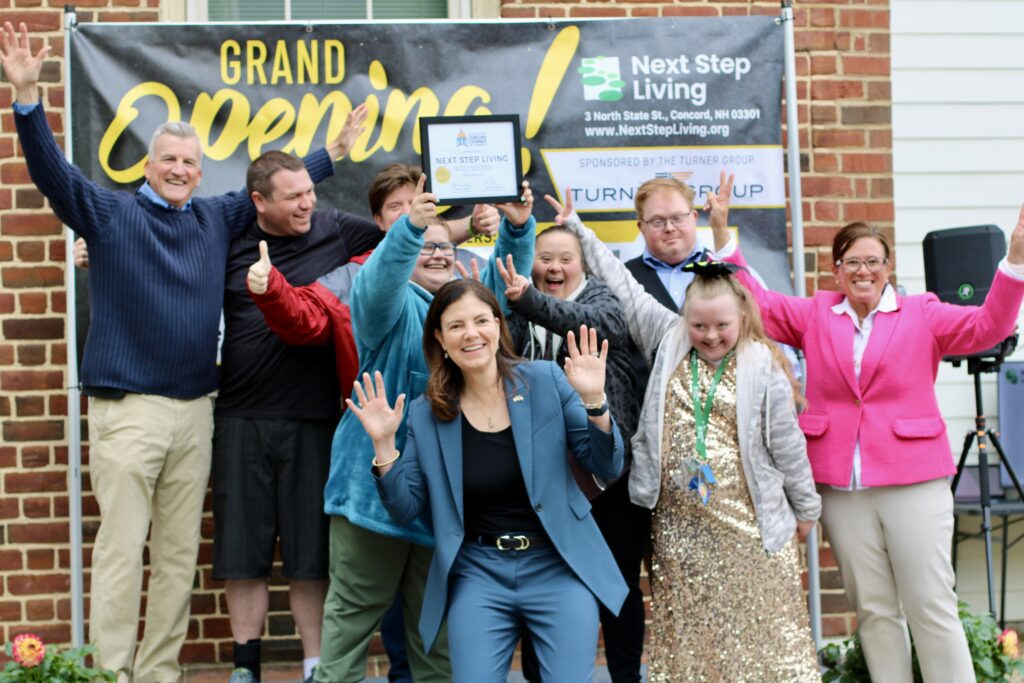
When addressing housing in New Hampshire, it is important to consider and support intentional choices that support independent living opportunities. Next Step Living is a first-of-its-kind community designed to support independent living for people with intellectual and developmental disabilities (IDD). An on-site residential life skills coordinator is available to offer guidance when needed and to plan ongoing enrichment activities that support growth, connection, and community engagement.
We interviewed founder and President Mike Dennehy to learn more about the organization’s work and how we can all take steps to support inclusive housing.
How is the housing you provide unique in the context of this region?
Our housing development is the only model of its kind in New Hampshire. We regularly hear from parents and guardians that their young adults are capable of living independently but lack housing that also offers meaningful community. The reality is that people with IDD often face greater social isolation and loneliness as they age. We’ve intentionally created a setting where residents can build friendships, participate in shared activities, and become engaged members of downtown Concord if they choose.
What barriers prevent more people from accessing independent living opportunities?
The biggest barriers are a severe shortage of accessible, affordable housing and limited funding models that don’t keep pace with the real cost of supportive independent living. In addition, outdated assumptions about people with IDD and restrictive policies often limit opportunities before individuals are given the chance to succeed.
How do you help residents become connected to the broader community?
We support residents in building real connections by encouraging employment with local businesses, creating volunteer opportunities, and offering group activities that foster friendships and confidence. Our downtown location makes it easy for residents to participate in community events, access local services, and engage at their own pace. Ultimately, we focus on choice – residents decide how and when they want to be involved.
What does respectful representation look like when organizations talk about disability and inclusion?
Respectful representation of disability treats it as a natural part of human diversity, not a problem to be solved or a story designed to evoke sympathy. It ensures people with disabilities have a meaningful voice in how their experiences are shared and avoids stereotypes, token gestures, or exaggerated narratives. Communication reflects autonomy, capability, and civil rights, while remaining honest about real barriers. Above all, it demonstrates true inclusion through shared leadership, accessibility, and authentic partnership.
What are small changes that make the biggest difference for creating inclusion?
Small changes that drive inclusion start with ask, don’t assume – create space for people to share their needs and take those needs seriously. Normalize flexibility by offering multiple ways to participate, communicate, and work, recognizing that one-size-fits-all excludes more people than it serves. Train for awareness, not perfection, encouraging listening, curiosity, and adjustment instead of fear of mistakes.
What does it take to build a living environment that supports both independence and safety?
Building a living environment that supports both independence and safety requires thoughtful design, flexible supports, and a foundation of trust. It means creating accessible spaces, clear routines, and available guidance while allowing individuals to make their own choices and learn through experience. The balance comes from planning for safety without over-supervising, so independence is protected rather than restricted.
How are you hoping to expand Next Step Living in the future?
In just nine months, we’ve seen how well a small, 11-person community can thrive, and our residents are happier than ever in their new apartments. We hope Next Step Living can serve as a model for similar housing developments for people with IDD across the state. We remain committed to highlighting the urgent need for safe, accessible housing that supports independence and community.
What does inclusion mean to you personally, and why does it matter?
Inclusion, to me, means people don’t have to ask permission to belong – they are seen, valued, and able to fully participate as they are. Over the past nine months, I’ve watched my 25-year-old son grow and learn in remarkable ways since moving into his apartment. His progress is a powerful reminder that everyone has ability and potential; we should never assume limits for people with IDD. At Next Step Living, we challenge ourselves every day to raise expectations and expand opportunities for every resident.
To learn more about Next Step Living, visit their website using the button below, or contact Mike at mike@dennehybouley.com.
Next Step Living is headquartered at 3 North State Street, Concord NH 03301.
Incorporated in 1919, New Hampshire’s state capital chamber of commerce—the Greater Concord Chamber of Commerce—develops economic opportunities, strengthens the business climate, and enhances quality of life in the Capital region. As the largest chamber in the state, it is deeply invested in the local community and dedicated to shaping competitive economic development strategy, advocating for policies and projects that benefit the region, and promoting Concord as a culturally vibrant visitor destination.